I’m well past being late on posting, but it takes a while to sort through all these pictures. I’ll upload some this week on here as well as Facebook for all who wish to see!
Dec 17 – Delhi
Our 2 hour flight from Hyderabad to Delhi had us landing still in the morning, and arriving at the hotel while breakfast was still going on. We dropped off our bags and walked down the street for some breakfast, then headed out to see some of the sights. The first spot on our list: Akshardhan Mandir
Akshardhan Mandir – Heritage Exhibit
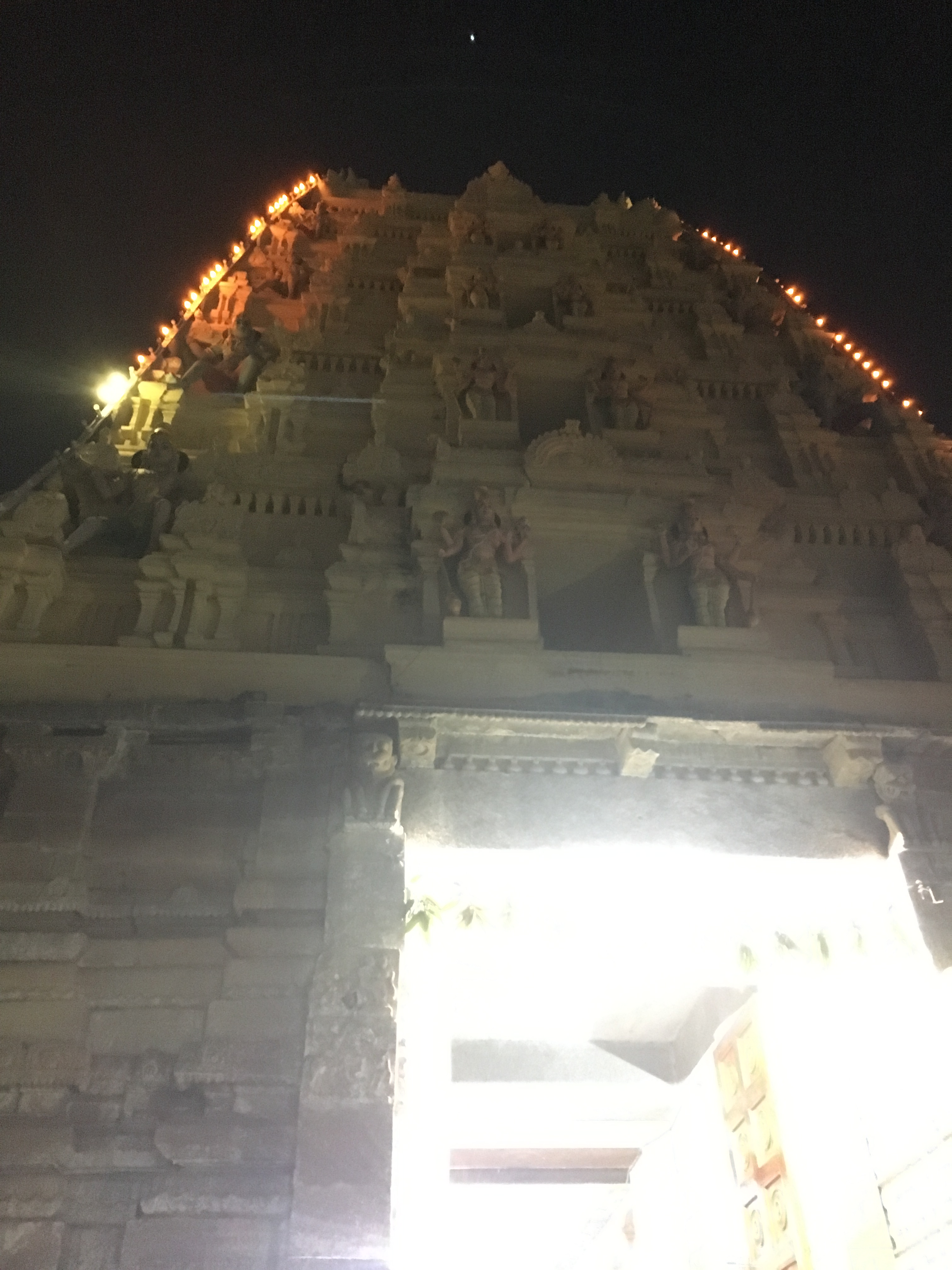
The Mandir (temple) is a complex constructed in 2005 dedicated to Bhagwan Swaminarayan (1781- 1830) and taken from the website is a place of worship as well as to learn about the Hindu culture. Was built using traditional temple architecture styles with sandstone and marble with the help of over 8,000 volunteers from across the world donating a total of over 300,000,000 man hours. Pictures weren’t allowed inside the buildings where the idols were housed, so those you’ll have to check from the website.
Qutb Minar
A UNESCO World Heritage Site, the Qutb Complex dates all the way back to 1220 A.D., construction of which was started by who would become the first Sultan of Delhi. The complex had buildings added by different rulers over the several years of its existence, but its best-known structure is the Qutb Minar. The Minar, or minaret, is the tallest brick minaret in the world, and second highest minaret in India (from Wikipedia).
India Gate
Made detour through the city on the way back to the hotel to see the President’s house (and guest houses) along with the India Gate. Looks a nice place to call home. The India Gate was unveiled in 1931 and is a monument to the fallen Indian soldiers from World War I.
Dec 18 – Road to Jaipur
Pink City
Jaipur got its famous red colored buildings as a means to impress British royalty (Prince Albert) when they were touring through the region all the way back in 1876. The Maharaja of Jaipur wanted to impress the Prince and his wife, Victoria. To do this, he had all of the buildings painted pink. The Maharaja’s favorite wife loved it so much that she convinced him to pass a law making it illegal for a building to be painted any other color. This law still stands today, which is how the city has retained its color (source). Other stops: City Palace (inside pink city), Maharaja Sawai Man Singh II Museum
Drove by Hawa Mahal (Puji later got to go inside)
One of the iconic pictures of India that most people may not know the name of is the Hava Mahal, or the big windowed-wall of the pink city that litters the search results of “Jaipur”. This Palace of the Winds, as its translated, structure goes back to 1799, well before it was painted pink. Was built so that the royal women could observe the sights of the street life and festivals below without being seen since it was still traditional for them to have their face covered. (sources: Wikipedia and MapsOfIndia). Also drove by Albert Hall Museum.
Chokhi Dhani
Chokhi Dhani is a village experience that aims to let the visitor see how village life was several decades ago in Rajasthan, and potentially in some rural areas today. It reminded me of a Silver Dollar City-type place with different shops and stations showing various arts, crafts, and foods. I also got to ride a camel! There were stages with dancers and others with bands sitting with traditional instruments playing tunes. Along with her parents, Puji and I sat for a traditional village meal, complete with a few different kinds of sweets, one covered in clarified butter (or ghee, as it is called), which turned out to be my downfall later on.
Dec 19 – Jaipur
Amber Fort
The next day we went to the well-known and photographed Amber Fort (or Amer Fort as it is also called) situated on the top of a hill on the outskirts of Jaipur. It was a windy road through the old town on switchback after switchback to get to the fort, but the structure, which started construction back in 1592, was incredible, and the views were amazing. From the top of the walls and through the windows, we could see over all of Jaipur, including the Palace on the Lake (our next stop). One of the cool spots in the fort was the mirror room. As its name suggests the room, and surrounding outdoor hallway, had its walls adorned with small mirrors, so that it could be lit by a single candle. The guide showed us this by pointing a flashlight to the ceiling and running his hand over the beam. Looking up, we could see the shimmer of the beam in hundreds of the tiny mirrors above us, giving the appearance of stars twinkling. Hundreds of years ago, this would let a single candle be used for illumination at night, and let the royalty have the feeling of sleeping under the stars from the smallest source of light.
Jal Mahal – took pictures
In the Google search of Jaipur, along with the red fort and Hawa Hamal, the Jal Mahal will also be among the top image results, easily identified as a palace in the middle of a lake. This one we couldn’t go inside (didn’t feel like swimming) so we took pictures from the greenway surrounding the water.
Another hilltop fort dating back to the 1700’s with a beautiful view of the city of Jaipur from the fort’s walls. Here my stomach got the best of me and put me out of commission for the rest of the day and was confined to the hotel while Puji and her parents carried on to one last stop for the day.
Puji and parents went to Juntar Munthar Jaipur (there are 5 Jantar Mantar monuments, the largest of which is in Jaipur), an architectural site home to several sundials, including the world’s largest sundial and one that is accurate to a minute.
Dec 20 – Jaipur, Leaving for Agra
Fatehpur Sikri is a fort within present day Agra that was founded in 1569 by a Mughal emperor, and served as the Mughal capital from 1571 to 1585. The emperor moved the capital from its old position (23 miles away) to Fatehpur Sikri (‘Fateh’ meaning ‘victorious’), complete with a 5-mile-long wall built from its days of use. It was abandoned in 1585 once the spring-fed lake which supplied the fort with water dried up.
Dec 21 – Agra
Our last day of the trip we made it to the one cite that seems to universally represent India – the Taj Mahal. Taj Mahal (which according to Wikipedia means ‘crown of the palace’) was built by the Mughal emperor Shah Jahan in memory of his favorite wife, Mumtaz Mahal. At around 350 years old, there are several reasons why it is a UNESCO World Heritage Site and considered a World Wonder. The craftsmanship is amazing, with all the colored sections of the outer wall not being paint, but inlaid semi-precious stones, which to the touch are perfectly flush with the rest of the structure – all of which is marble brought in from Rajasthan (state in which Jaipur is). This holds the record for place with most pictures taken on the trip.










 An American in India